

Germany plans to move ahead with the legalization of the production and sale of marijuana, with a series of expert hearings to be held at the federal Health Ministry this week. Germany is likely to become the second COUNTRY in the G20 to legalise recreational marijuana, after Canada legalised the cultivation and sale of the drug in 2018.
The financial opportunity for legalization could be in the billions of dollars, but experts caution that the size of the potential market will depend not only on population size but also on the specifics of the legislation, and Germany's marijuana reform bill has yet to take shape.
The first of five hearings will be held this week, the Health Ministry announced.
The five hearings will cover:
1. Health and consumer protection
2. Protection and prevention of minors
Supply chain, ecological and economic issues
4. Criminal responsibility, management methods and licensing
5. International experience
"We will start the preparatory phase for legalization." Burkhard Blienert, Germany's commissioner for drugs and addiction. "The hearing will discuss what steps can be taken to ensure that young people, public health and consumers are best protected when recreational marijuana is legalized. One thing is clear: we want to protect children and young people from possible risks."
More than 200 leading experts on addiction drugs, addiction support, legal, corporate and industry associations, as well as representatives of German states, municipalities, federal departments and other federal agencies, are expected to participate in the hearing process.
In addition, experts from around the world will present their views at the International Experience hearing on June 30.
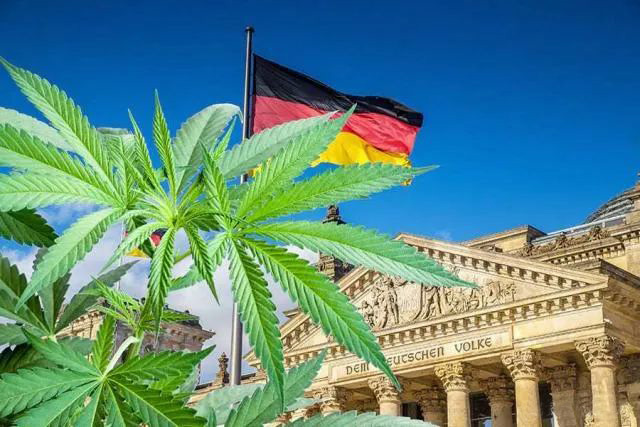
Medical marijuana has been legal in Germany since 2017, when parliament voted unanimously to legalize and require public health insurers to pay for treatment. Today, Germany is the largest country in Europe and Europe's leading market for medical cannabis, with more than 128,000 patients receiving medical cannabis treatment in the country each year.
In Germany, the market is regulated by the Federal Institute for Drugs and Medical Devices (BfArM). Recreational marijuana is illegal, but small amounts can be tolerated. CBD products are legal, but must comply with the THC limit (less than 0.2% THC). Industrial hemp flowers can be sold, but only for industrial and scientific purposes, not for direct consumption.
Legalization of marijuana was pushed to the top of Germany's political agenda after the country's traffic-light ruling coalition came to power in late 2021, sparking a backlash in the global cannabis industry.
Entering 2022, just in the past few weeks, public statements by Germany's health minister, finance minister and justice minister have endorsed the government's intention to legalize marijuana use for adults.
In early May, Germany's health minister, Karl Lauterbach, confirmed to the German newspaper Handelsblatt that he supported legalizing marijuana in his country, saying, "I was always against legalization, but I changed my position about a year ago."
Prior to that, on 6 April, The Minister of Justice, Marco Buschmann, announced that he was working with the Ministry of Health to develop a legalization strategy, which would involve a consultative process. The process will include talks with representatives of federal, state and local governments and other organizations. Talks will begin this summer, with a formal bill expected by the end of 2022.
Once the measures are officially introduced and implemented, Germany could become the cannabis hub of Europe.
In November 2021, Justus Haucap, an economist at the University of Dusseldorf in Germany, published a study that found that annual demand for cannabis in Germany would reach 400 tonnes, with a market value of 4 billion euros if sold at an average price of 10 euros per gram.
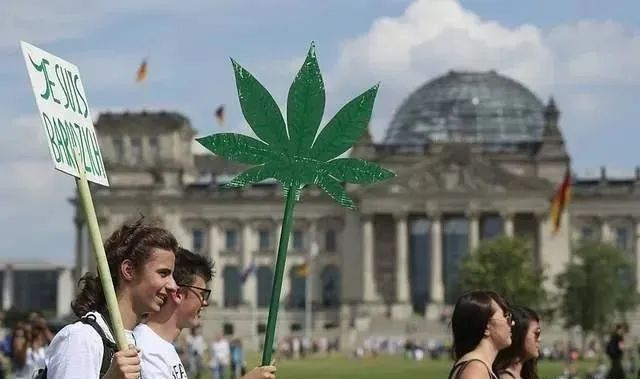
Will legalisation trigger a European chain reaction? Like many other countries that have legalized or are currently legalizing marijuana, Germany's new initiative is based on social costs. A tax on cannabis products could bring in significant revenue for the state, clamp down on the black market and reduce organized crime. According to a study by the University of Dusseldorf, a policy to legalize marijuana could reduce spending on law enforcement and the justice system by 1.3 billion euros a year, generate an additional 3.4 billion euros in tax revenue and create 27,000 jobs.